Showing posts with label the dark night of the soul. Show all posts

Friday, September 5, 2008

An Open Letter to Pope Benedict XVI Regarding the Cause for Canonization of Mother Teresa of Calcutta

Today is the eleventh anniversary of the death of Mother Teresa of Calcutta. With the publishing of her private writings, on the same date last year, a more intense interest in her life arose. Below is an open letter I recently sent to Pope Benedict XVI. Also, the letter was sent to the Catholic bishops, Catholic media, and the media here and abroad.

"Fiat justitia ruat caelum."

Thank you for your consideration,

Mark M. Zima
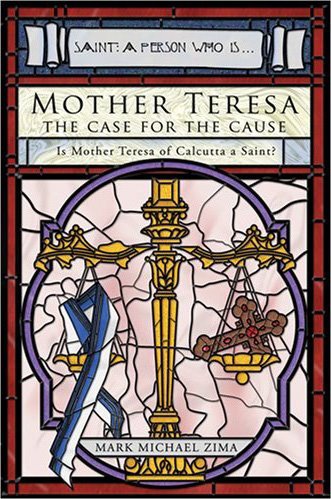
--author of Mother Teresa: The Case for The Cause

An Open Letter to Pope Benedict XVI
Regarding the Cause for Canonization of Mother Teresa of Calcutta


Your Holiness:

One year ago, on the tenth anniversary of her death, Fr. Kolodiejchuk released Mother Teresa’s private letters. Since their release, her letters have led to a global questioning of her spiritual state. The popular interpretation of her words, by Catholics, is that she experienced the dark night of the soul. Those who hold that position base it on the presupposition that she was holy. Therefore, her “dark night” is interpreted as a true sanctifying dark night of a Saint. But is their judgment correct?

Before her community was approved, in her letters, Mother Teresa declares, “There are millions who live in Indian cities and villages in ignorance of God and of Christ, in abominable sinfulness. We shall bring them to Christ and Christ to them” (Mother Teresa: Come Be My Light, 116). But when her community was approved, she taught, “I convert you to be a better Hindu, a better Catholic, Muslim, Jain, or Buddhist” (Mother Teresa: The Case for The Cause, 4). There are some who argue that she did not mean what she said and she wanted to convert those she met. There is some truth to their claim. Nevertheless, her words are misleading to the hearer and the reader.

Mother Teresa said, “We never try to convert those who receive [aid from Missionaries of Charity] to Christianity but in our work we bear witness to the love of God’s presence and if Catholics, Protestants, Buddhists, or agnostics become for this better men—simply better—we will be satisfied” (Mother Teresa: The Case for The Cause, 47). In 1990, she spoke at the Vatican. She told an audience of priests, “We call baptism the ticket for St. Peter. She said, “Not one has died without the ticket for St. Peter. We call baptism the ticket for St. Peter because He [God] won’t let them go to heaven without that ticket” (Mother Teresa: The Case for The Cause, 126). Clearly, Mother Teresa was not “satisfied” that these people did not “convert.”

Mother Teresa wanted to preach, “The Kingdom must be preached to all” (Mother Teresa: Come Be My Light, 133). But the kingdom she preached was, “I love all religions but I am in love with my own. If people become better Hindus, better Muslims, better Buddhists by our acts of love, then there is something else growing there. They come closer and closer to God. When they come closer, they have to choose” (Mother Teresa: The Case for The Cause, 47).

Contradiction was a state of life for Mother Teresa. She was afraid of the loss of souls, “Souls are being lost in the slums and in the streets, the Sacred Heart of Jesus is more and more suffering—and here I am waiting” (Mother Teresa: Come Be My Light, 119). But she taught, “When we die we are going to be with God, and with all those we have known who have gone before us; our family and our friends will be there waiting for us. Heaven must be a beautiful place” (Mother Teresa: The Case for The Cause, 115). The first rule of the Missionaries of Charity was to instruct in ”Christian Doctrine” the poor, the abandoned, the sick, the infirmed, and the dying (Mother Teresa: Come Be My Light, 139). Did she teach ”Christian Doctrine” when she taught, “I’ve always said we should help a Hindu become a better Hindu, a Muslim become a better Muslim, a Catholic become a better Catholic” (Mother Teresa: The Case for The Cause, 29)?

Mother Teresa said, “There is so much contradiction in my soul.—Such deep longing for God—so deep that it is painful—a suffering continual—and yet not wanted by God—repulsed—empty—no faith—no love—no zeal” (Mother Teresa: Come Be My Light, 169-70). Sad words, but what in these words forces the reader to conclude that Mother Teresa suffered through the dark night of the soul? If the reader interprets these words of Mother Teresa to the exclusion of all that she said and did they are demonstrating their bias not Mother Teresa’s dark night. The Church’s teaching regarding the dark night of the soul is being distorted by many who think it is a suffering of any kind.

In his book, The Dark Night of The Soul, St. John of the Cross taught, “This dark night is an inflowing of God into the soul, which purges it from its ignorances and imperfections, habitual natural and spiritual, and which is called by contemplatives infused contemplation, or mystical theology. Herein God secretly teaches the soul and instructs it in perfection of love without its doing anything, or understanding of what manner is this infused contemplation. Inasmuch as it is the loving wisdom of God, God produces striking effects in the soul for, by purging and illumining it, He prepares it for the union of love with God. Wherefore the same loving wisdom that purges the blessed spirits and enlightens them is that which here purges the soul and illumines it” (bk. II, ch. 5, sec. 1).

Are the faithful being asked to believe that a Saint teaches ”Christian Doctrine” when they “help” a “Hindu become a better Hindu”? Are the faithful being asked to believe that Mother Teresa was purged and illuminated by God to “convert” Buddhists into “better” Buddhists? Was Mother Teresa purged from essential “ignorances and imperfections” relating to the faith?

In his book, Ascent of Mount Carmel, St. John of the Cross also taught, “Two contraries (even as philosophy teaches us) cannot coexist in one person; and that darkness, which is affection set upon the creatures, and light, which is God, are contrary to each other, and have no likeness or accord between one another, even as Saint Paul taught the Corinthians, saying: ‘Quoe conventio luci ad tenebras?’ That is to say: ‘What communion can there be between light and darkness?’ Hence it is that the light of Divine union cannot dwell in the soul if these affections first flee not away from it. In order that we may the better prove what has been said, it must be known that the affection and attachment which the soul has for creatures renders the soul like to these creatures; and, the greater is its affection, the closer is the equality and likeness between them; for love creates a likeness between that which loves and that which is loved” (Quoted in Mother Teresa: The Case for The Cause, 175).

“Two contraries cannot coexist in one person.” Mother Teresa’s statements are not paradoxical; they are contradictory. The Church and the world should praise Mother Teresa’s corporal works of mercy, but if St. John of the Cross or any other Saint read the above quoted words of Mother Teresa do you believe that they would conclude that her words were those of a Saint who experienced the dark night of the soul (Mother Teresa: The Case for The Cause, 24)? Mother Teresa said, “If there is hell—this must be one. How terrible it is to be without God—no prayer—no faith—no love” (Mother Teresa: Come Be My Light, 250). Do you believe that the Saints would find this quote indicative of a Saint who experienced the dark night of the soul or a soul who experienced a dark night?

In canonizing, the Church seeks to honor “the holy and undivided Trinity,” exalt “the Catholic faith,” and cultivate “the Christian religion.” The candidate for canonization must be someone who possessed and demonstrated heroic faith, hope, love, prudence, justice, fortitude, and temperance. How were these virtues heroically fulfilled by Mother Teresa?

I am aware that you have a great respect for Mother Teresa (Deus Caritas Est, 18, 36, 40) and I am aware that what I am saying may be causing you some pain, but I beg you to reflect on this letter before our Lord in the Blessed Sacrament. Please ask yourself, “If anyone else who was not Mother Teresa said and did these things, what would I think? How would I respond?”

St. Thomas Aquinas said, “the lover is not satisfied with a superficial apprehension of the beloved, but strives to gain an intimate knowledge of everything pertaining to the beloved, so as to penetrate into his very soul” (Summ. Theol., la. 2ae., q. 28, a. 2). Accordingly, anyone who loves Mother Teresa cannot desire to represent her other than who she really was. The proper interpretation of Mother Teresa’s true spiritual reality is the next step in the story of a woman who has become a religious icon for the Church and the world. I believe that you will conclude that the common presupposition of Mother Teresa’s “dark night” must give way to a new interpretation of her person.

Mother Teresa’s cause is complex because it is a high-profile case. For this reason, it is imperative her case is settled promptly, so that the errors surrounding her life are ended and scandal abated. Silence does not save souls but it will lead them astray. Failure to act now ensures a more difficult case for the Church to correct in the future. If Mother Teresa is a Saint, no one can take away the canonization God has already bestowed upon her. However, if she is not a Saint, then those who love her must expose the truth so multitudes do not pray for her intercession, but instead intercede for her soul.


Your son in the faith,

Mark M. Zima
author of Mother Teresa: The Case for The Cause

Tuesday, May 20, 2008

The Marian Dimension of Mother Teresa’s Dark Night « Mary Victrix

The Marian Dimension of Mother Teresa’s Dark Night « Mary Victrix

I am going to run an ongoing blog about this page. It is a good representation of the kind of responses I receive from certain "Catholics." At present, there are priests and bishops reading my book. I have friends who are priests. They are priests of all different backgrounds. All of them believe the priest and on this website, Fr. Angelo, is not well.

After Fr. Angelo definitely stated that he did not want any more posts, I asked a friend of mine, who is a parish priest, to look at Fr. Angelo’s comments and give me his opinion if I should let Fr. Angelo know that he was destroying a “straw man.” The priest responded by telling me, I choose my words carefully, not to waste my pearls. I say this not to be mean but to show that Fr. Angelo’s opinion is not the dogma of the priests, and the priests I know feel very strongly that Fr. Angelo is fatally flawed in his opinion.


Do not think that I came to send peace upon earth: I came not to send peace, but the sword. For I came to set a man at variance against his father, and the daughter against her mother, and the daughter in law against her mother in law. And a man's enemies shall be they of his own household.
These are the words of Jesus (Mt. 10:34-36). It is not my expressed desire for conflict but if conflict comes to the Church because of my book’s fidelity to the Gospel, I welcome the conflict.

The rhetorically ruff exchange on Fr. Angelo’s webpage started when I came across his blog. I know Fr. Angelo personally but have not spoken with him in 5 years. I have lived with his community (Franciscans of the Immaculate) and even thought about joining them. I did not join them because they seemed to have the veneer of Traditional Catholicism but lacked the substance thereof.

Fr. Angelo posted:

Not so long ago, with the publication of Blessed Mother Teresa’s letters to her spiritual director
much misinformation was disseminated about her “dark night,” namely, that is Mother had lost her faith. The arch-atheist, Christopher Hitchen’s and other anti-Catholic enthusiasts were quick to vilify this holy woman, whose trial should be a source of edification.

Recently
Zenit interviewed Missionary of Charity Father Joseph Langford, cofounder with Mother Teresa of her community of priests, the Missionaries of Charity Fathers, about his new book Mother Teresa: In the Shadow of Our Lady.

Blessed Teresa, like Our Lady, took the road to Jerusalem in obedience to Jesus: Unless you pick up your cross and carry it, you cannot be my disciple. Perseverance in the dark night of faith is spiritual chivalry, spiritual prowess and largess, and in the case of Mother Teresa, it is an extension of the Marian Way of Beauty.

One cannot argue with likes of a blasphemer like Hitchens. In an
debate between him and Bill Donahue of the Catholic League he referred to the faith-based defense of Mother as “white noise.” All we can do is say to Hitchens is “come and see.” His only hope is the Way of Beauty . . . and of course, prayer and fasting. Here is an excerpt of the Zenit interview with Father Langford:

Q: What did you learn about the Blessed Mother from Mother Teresa?

Father Langford: The book is a compendium of what I learned of Our Lady over the years, from watching and listening to this Saint of the Gutters. It is a simple apologia for Our Lady’s role, wrapped not in polemics, but in the humble sari of one of the gospel’s most credible and approachable witnesses.

It is impossible to observe Mother Teresa’s faith without being reminded of the faith of Our Lady. Though her darkness bore other names and other dimensions, Mary of Nazareth lived her own night of faith.

Consider Joseph’s months of doubt; finding no room in Bethlehem; the flight into Egypt; the years of Jesus’ absence from Nazareth; the hours of his agony on the cross; and her own agony as he lie in the grave. From these came the lessons of faith she shared with a young Mother Teresa.

Mother Teresa’s own life, and her sense of the role of the Mother of God, was that of “an ongoing Visitation,” a “going in haste” to bring God to others. This Marian vision was based on Mother Teresa’s own experience, but also firmly rooted in scripture.

The Gospel account of the Visitation in the first chapter of Luke shows obvious echoes of the “visitation” made by the Ark of the Covenant to David, also “in the hill country of Judea.” No one disputes that the Ark carried a special anointing of grace and divine presence, that it was itself a “theotokos” (”God-bearer”), though only made of wood.

Can God not do the same and more, in a latter Testament, with a new and better Ark? Are we scandalized that God can make of flesh what once was? Or has our generation understood “neither the scriptures nor the power of God?”

In the end, Mother Teresa would not be one to argue, but simply to say of this Marian mystery, as she so often did of the mystery of Christ hidden in the poor: “Come and see.”


I posted:

Mother Teresa did many corporeal works of mercy, and she deserves praise for those works. However, why do those works instantly translate into her having an authentic “dark night of the soul?” Some may reply, “She was also a Catholic.” It is true that she professed many Catholic beliefs but it takes more than the profession of many Catholic beliefs and the performance of the corporeal works of mercy for a dark night of the soul to take place.

Mother Teresa’s “dark night” is based on the presupposition that she was holy. Therefore, her “dark night” is interpreted as a true sanctifying dark night of a Saint. But is that truly the case? Is her life being interpreted correctly? Mother Teresa said, “There is so much contradiction in my soul” (Mother Teresa: Come Be My Light, 169). Perhaps, it was this kind of contradiction to which she was referring, “There are millions who live in Indian cities and villages in ignorance of God and of Christ, in abominable sinfulness. We shall bring them to Christ and Christ to them” (Mother Teresa: Come Be My Light, 116). But then said taught, “We never try to convert those who receive [aid from Missionaries of Charity] to Christianity but in our work we bear witness to the love of God’s presence and if Catholics, Protestants, Buddhists, or agnostics become for this better men—simply better—we will be satisfied” (Mother Teresa: Life in the Spirit, 81). She wanted to preach, “The Kingdom must be preached to all” (Mother Teresa: Come Be My Light, 133). But the kingdom she preached was, “I convert you to be a better Hindu, a better Catholic, Muslim, Jain, or Buddhist” (Mother Teresa: Saint of the Poor, 38–39).

If St. Francis, St. Claire, St. John of the Cross, St. Teresa of Avila, etc., read Mother Teresa’s words in the last paragraph, it is safe to say they would not conclude that her words were the words of a Saint who experienced the dark night of the soul. It is also safe to say that Mother Teresa’s words are not the “Whatsoever he shall say to you, do ye” (Jn. 2:5) of Our Lady.

I believe the common presupposition of Mother Teresa’s “dark night” must give way to a new interpretation of her person. I am sorry for any pain my words and the information I am presenting may be causing some readers. I will leave you with this consolation. St. Thomas Aquinas said, “the lover is not satisfied with a superficial apprehension of the beloved, but strives to gain an intimate knowledge of everything pertaining to the beloved, so as to penetrate into his very soul” (Summ. Theol., la. 2ae., q. 28, a. 2). Accordingly, anyone who loves Mother Teresa cannot desire to represent her other than who she really was. Take all Mother Teresa’s words before the Blessed Sacrament and ask Our Lord if her words are the words of a Saint who experienced the dark night of the soul.

Pax et Bonum,
Mark M Zima

Fr. Angelo responded:

Mark,

I do not find your words painful, and I should hope that others do not. I am sorry that you, a Catholic, have chosen a public forum like this to express your opinions contrary to the teaching of the Holy Father.

I trust Holy Mother Church and her beatification process. That you should defame someone like Mother Teresa, publicly for all to see, and assert your opinions, however astute, in contradiction to a declared beatification is both scandalous and presumptuous. I will not have it here. Period.

The lives of the servants of God whose causes have been introduced for canonization are scrutinized by a “devils advocate,” as you well know, and Mother Teresa’s words would not have been the first to pose theological difficulties which were eventually resolved, leading the way to beatification and then canonization. That you should present rogue opinions to the faithful in the pews contrary to the teaching of the Holy Father is presumptuous to the point of ridiculousness.

I am not going to argue this with you. Even if there were a basis for your contention, which I do not for a second grant, then responsible, humble and qualified theologians whose consciences were so convicted should, according to the proper domain of their mandate, discuss this within scholarly and magisterial circles; however, for an armchair theologian as yourself to write such things, either in a book or a blog, and discuss them as though an authentic Catholic life could be based on such arrogance is irresponsible and reprehensible.

I will say the same thing to you that I would say to a Modernist: if you think you know better than the Pope and are willing to declare it publicly, even to those who are even less qualified to make theological distinctions than yourself, then perhaps you are not ready live as a Catholic.

I have much sympathy for Traditional Catholics who have suffered and continue to suffer by the neglect of fathers within the Church, but that is not an excuse to create more dysfunction within the family. I suspect your position on Mother Teresa is just a small part of a larger hermeneutic of discontinuity. (Full disclosure: Mark and I know something about each other’s theological inclinations as we have met and spoken before).

I sympathize with those who struggle interiorly to remain within the Bark of Peter and who express their spiritual needs respectfully. But I have no respect and will show none for this kind of scandal.

Take it somewhere else.

I am sorry that you have brought it to this. I could not respond to your public and presumably learned comments in any other way.