Showing posts with label Hope Endures. Show all posts

Friday, February 20, 2009

Profile: Collette Livermore


By Lucinda Schmidt
February 18, 2009


Faith and science mix for a woman who has been a nun with Mother Teresa, an author and a doctor.

At the age of 18, Collette Livermore's life took an 11-year detour. Instead of studying medicine, as planned, she decided she could better help those who most needed it by becoming a nun.

"I really felt that life is such a lottery, and I wanted to respond to the poor," says Livermore, now 54. "And I suddenly had this crazy idea."

That idea sprang from several things that happened during her final year of high school, in 1972.

Her mother almost died during an operation and told her daughter of her out-of-body experience, looking down on the medical staff trying to revive her. Livermore also was affected deeply by television reports of the Biafra famine and her convent school screened the film Something Beautiful For God, about Mother Teresa.

So she joined up as a novice in Mother Teresa's Missionaries of Charity, working in Melbourne, where she took her first vows in 1975 as Sister Tobit.

Even in those early days, Livermore began to have doubts that the strict Catholic religious order - which demanded subservience above all else - was the right place for her.

She found a homeless man lying dead, started CPR then called police and an ambulance, waiting with his body until they arrived. When she returned to the nun's home, she had strips torn off her for being late.

"If you were corrected like that, you had to keep quiet or say thank you sister, yes sister," Livermore says. "There was a big emphasis on being humble and accepting, and no emphasis on being courteous to each other or having a bit of flexibility."

In postings to Papua New Guinea, Manila, Calcutta and Hong Kong, she continued to get into trouble for not adhering strictly to the rules. In Manila, for example, parents arrived at the nuns' hospice with a very ill child on a "day of recollection", when no one was supposed to be admitted.

Livermore admitted the child, who lived, then wrote to the Mother House in Calcutta to explain why she had done so. The response was that her hands should have been tied by obedience, like having to watch Jesus die on the cross.

Another problem was the lack of even basic medical training. In Manila, the nuns were sent out to help those who lived in a slum at the foot of a smoking garbage mountain.

"We were doing the sort of work I wanted to do - that was the place I felt most at home," Livermore says. But she had no idea how to treat the tuberculosis afflicting many of the slum-dwellers.

Livermore tried to leave the order in 1981, just before she took her final vows, but Mother Teresa told her the devil was trying to destroy her vocation. Livermore was ordered to hit herself with a discipline (a knotted rope) and do more prayer and penance, wearing a chain around her waist.

"I'm not bagging Mother Teresa - I think she was very courageous - but I think the spirituality she was guided by was from the 1930s," Livermore says. "The paradox was that absolute obedience could lead you away from compassion. She thought suffering was a power for the good, that you could use humiliation as some sort of religious tool."

Livermore finally left in 1984 and followed her first calling, to become a doctor. She now works as a general practitioner in Gosford, NSW.

Her impetus to write Hope Endures came with Mother Teresa's beatification in 2003. She also lost all belief in God after the 2004 Asian Tsunami.

"I'm not a Pollyanna; I'm an ordinary person trying to do what I can to make life bearable for others."

THE BIG QUESTIONS

Biggest break Getting into medicine at the University of Queensland in 1985. I accidentally applied in the wrong stream as an undergraduate. All the other mature-age students had other degrees already.

Biggest achievement Graduating in medicine. I hadn't studied in 13 years, and had no intellectual input during that time.

Biggest regret Not having children or a lifelong partner.

Best investment My medical degree. It opens up so much opportunity - you can work almost anywhere - and it is a very satisfying job.

Worst investment When I went to Timor, I sold my house [in Katherine, NT]. I was going to put the money in a term deposit but a financial planner convinced me to put it in a managed fund. While I was away it lost about $15,000 - I was living on a $200 a month allowance [as an aid doctor].

Attitude to money It's a valuable tool, it can help you do things, open horizons, give you opportunities. As long as the tool is not in charge.

Personal philosophy To your own self be true and you won't betray anyone.

Hope Endures, by Collette Livermore (Random House), $34.95.


My Comment:

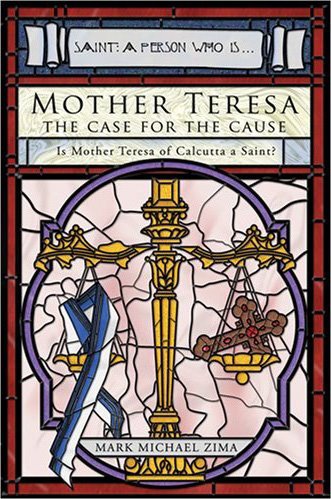
I have many thoughts about the article but I found particularly interesting this comment, “Her impetus to write Hope Endures came with Mother Teresa's beatification in 2003.” Interesting enough, Mother Teresa's beatification in 2003 forced me to write my book. I hoped Rome would just ignore her cause; I never thought Rome could be that stupid. I hope she sent her book to the Congregation for the Causes of Saints.

The very next sentence in the paragraph is why Livermore needs our prayers, “She also lost all belief in God after the 2004 Asian Tsunami.” That is what happens when you’re about social work but not the work of God. That is what happens when you don’t believe in a sovereign God. That is what happens when you do believe that people are naturally good—and not naturally evil. And, that is what happens when you have bad formation and bad spiritual direction.

Monday, January 5, 2009

Another Sister Leaves Mother Teresa's Community


SHE looks nothing like the nuns who taught me at St Joachim's, those good sisters who would all but fall to their knees at the approach of a priest.

Colette Livermore, however, spent 11 years within the physical and mental cloisters of religious life and discovered therein the shadows and demons which still torment her.

A gifted student who won a university scholarship to study medicine, she chose instead to follow Mother Teresa and joined the Sisters of Charity.

She now lives in coastal New South Wales and is in town for the day. We meet in the brasserie at the Stamford Hotel and she relates why she became a nun.

"When I was a kid, the Biafran famine was in the news. Kids were dying on the television set in front of you. I thought to myself that this couldn't be right and then I saw a Mother Teresa film and thought: 'That's the way to go! Get out there and do something!' I was very naive. I didn't appreciate the implications," she says.

It was not long before she realised that there were two sides to the saintly persona of Mother Teresa which the media had spun.

"Any organisation that demands you stick to a rigid timetable and do exactly what you're told is on the road to inhumanity, and I think and that was the problem," she says.

"Mother Teresa asked you to give up your brain, your will, everything. She asked for total surrender of the person.

"I grew up in Mossvale on the southern highlands of New South Wales and when I joined the order I went to Melbourne to the novitiate straight from school. I was just 18. It was a big change in life.

"Once you're within that sort of organisation, it's hard to get your bearings. You're off balance because Mother Teresa is a saintly person and the winner of the Nobel Peace Prize and all that sort of thing so you think that if you disagree with things, there must be something wrong with you rather than the organisation.

"We did our training and then I was sent to the Gulf province of New Guinea without any warning or preparation and nearly died of cerebral malaria.

"I was there for a few years and then transferred to Manila and worked in a garbage dump looking after people with tuberculosis. I wasn't even trained to the level of a barefoot doctor."

From Manila, Livermore was sent to Calcutta and it was there she tried and failed to leave the order. "You're always told that you're sinful and proud and all that sort of thing. It played with my mind. I realised things weren't right but I couldn't get any external bearings.

"You're cut off. You can't listen to the radio or read the newspapers or talk to friends. You have very little contact with your family. Your mind is only hearing one opinion. There's only one voice speaking. It's difficult to leave when Mother Teresa is telling you that it's to do with the devil."

Livermore's disaffection with Mother Teresa peaked when she clashed with her superiors over a decision not to treat sick children on a holy day.

"A ruling was made that on this recollection day, this day of prayer, children were not to be admitted to the Home for the Children.

"This really sick child came in with stick arms, breathing really fast and dehydrated and I was told he couldn't stay. I had this internal conflict and eventually the child was admitted but only after I'd had a big fight.

"These sorts of things happened time and time again because there was this rigid obedience and timetable, so I wrote to Calcutta and said: 'This can't be right.'

Mother Teresa's reply was not the one Livermore had hoped for. "She said that just as Our Lady watched Jesus die, I should be able to accept the death of a child if obedience asked it of me.

"Then I said: 'That's against the gospel' and they said that even the devil could quote scripture."

Livermore's portrait of Mother Teresa is of a woman tortured by her own spirituality.

"It led her to some pretty dark places," she says. "She talked about her inner emptiness and misery. She said 'Empty yourself of all that's not God.' She just felt depleted and that's what happened to all of us too."

Livermore's mother, who had been opposed to her joining the order, knew nothing of this. "My family wasn't aware because you weren't supposed to tell anyone. It was a secret.

"Mum was disappointed I'd thrown away the chance to do medicine because our family struggled. My father had left us and she was struggling to support four kids and for her eldest to take off was hard."

Livermore eventually wrote to Mother Teresa telling her she could no longer cope.

"She said she thought it was the devil, the Father of Lies, trying to rob me of my vocation and get me off the track but I couldn't do it any more. It was screwing my head around. I was 30 and I'd been in there 11 years."

Livermore describes the order as a sect and has written a book, Hope Endures, chronicling her experiences.

Mother Teresa's mistake, says Livermore, was in thinking that obedience was more important than compassion.

"That's not something that's widely known and not part of what the media says about her. It was dictatorial. I should have got out sooner," she says, shaking her head.

When she finally left, she turned to the medical degree she had spurned when she joined the sisters and became a doctor, working in Timor, the Northern Territory, the Congo, Sudan and Darfur.

One casualty of her time with Mother Teresa was her religion.

" I ended up an agnostic," she says. "I just couldn't believe it any more but if, as when I was in Timor from 2000-2003, you can do something for the kids, then for some people at least, you can make a difference."

Livermore blames no one but herself for what happened.

"After all," she says, smiling, "no one handcuffed me. It was my own silly choice. My mother told me I was a drongo but once I was in there, I couldn't get free.

"That's part of the reason I wrote the book - to tell religious people not to give up that inner compass that they have. You can't live your life with all these excluding rules."

She says the problems within the order are exemplified by the nuns' practice of self-flagellation, whipping themselves to try to imitate Christ's suffering.

"Suffering comes your way and you have to put up with it but," she says, "but it's sort of warped to go looking for it."

* Hope Endures by Colette Livermore, William Heinemann Australia, $34.95