Showing posts with label Is Mother Teresa a Saint?. Show all posts

Tuesday, April 21, 2009

Retracting My Book?

Someone recently commented on my book:

“And if the canonization does come about, you'll have to retract the entire book, I would imagine, or at least remove it from the market, as canonizations are infallible.”

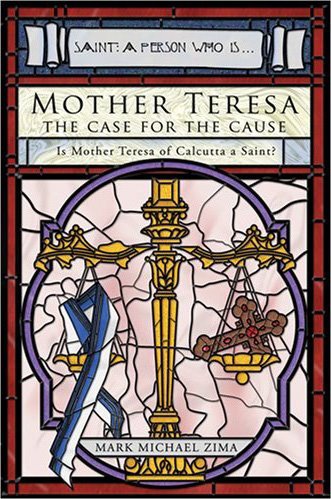
One evening when my book was being prepared by my publisher the interior designer of the book gave me a call. He was very frustrated that evening because his formatting software wasn’t cooperating with my text. He said to me, “Mark, do you know how many footnotes you have in this book?” I said I had lost count. He said, “You have almost 1600 footnotes in this book!” I tell you the story because those footnotes are mostly in reference to the quotes of the popes, fathers, doctors, saints, councils, and the Scriptures. What part of those writings do you wish me to retract? You see my book is more than a book about Mother Teresa; it is a book about the qualifications for a Saint and canonization. It is, also, a catechism of the faith.

I learned a long time ago that it is vital to have confessional parameters that are sacrosanct. If I did not have confessional parameters that are sacrosanct I would have been an ordained priest living in a religious community long ago. My vocation was confirmed by liberal, conservative, and traditional priests and religious alike. Many of the men I knew whose vocations were confirmed had the idea that it was their duty to get ordained and thought they could play the game to get through seminary. They were not the same men when their day of ordination arrived. They had become, or were on the way to becoming, the very people they saw as the destroyers of the Church when they entered seminary or religious life. What happened? Simply, they made the vocation an idol. A priestly or religious vocation is for the service of God, it is not end in itself. A Catholic is not called to the priesthood or religious life to see God be mocked it those environments only to say, “Someday I will defend you Lord!” That day is the day God give you the grace to know that he is being mocked; and if you are banned from the ordained priesthood or religious life because of your fidelity that is the will of the Lord and your vocation. Because these men rejected the grace of fidelity when given, God rejected them as his servants.

This same principle applies when addressing the larger picture of confessional fidelity. Dogmas and doctrines of the faith are not mysteries that a Catholic needs some special Gnostic knowledge to figure out. The dogmas are assessable to everyone; and the historic understanding of how they have always been understood takes a little work but is not outside the ability of someone who wants to know. I know what the dogmas of the faith are and how they have always been understood. I have drawn a line in the sand and will not cross it. I will not engage in tortured mental gymnastics to reconcile a teaching of a pope not in union with the declarations of the Holy Spirit just because he is pope. If that makes me not a Catholic then praise God, I am not a Catholic! We all have to decide of ourselves were viability dwells. Each of us will stand before the Lord and have to give an account for ourselves. Today could be that day. My conscience is informed and clear on this issue.

If you are a Catholic, how far will you go in obeying Rome? Where do you draw the line?

What do you do when the Church teaches that God is not God? Can’t happen? The Church is already teaching error about God, look at Nostra Aetate 3:

The Church regards with esteem also the Moslems. They adore the one God, living and subsisting in Himself; merciful and all-powerful, the Creator of heaven and earth, who has spoken to men; they take pains to submit wholeheartedly to even His inscrutable decrees, just as Abraham, with whom the faith of Islam takes pleasure in linking itself, submitted to God. Though they do not acknowledge Jesus as God, they revere Him as a prophet. They also honor Mary, His virgin Mother; at times they even call on her with devotion. In addition, they await the day of judgment when God will render their deserts to all those who have been raised up from the dead. Finally, they value the moral life and worship God especially through prayer, almsgiving and fasting.


What will you do if Rome teaches and defines:

Canon 666. If any one saith, that Moslems do not adore the one God, living and subsisting in Himself; merciful and all- powerful, the Creator of heaven and earth, who has spoken to men; let him be anathema.

If these hypothetical decrees and canons of Rome are heretical hypothetical decrees and canons, now and forever, then so is a St. Mother Teresa, for she embodies all those errors in her person.

Tuesday, November 11, 2008

Mother Teresa: Saint or Celebrity?

Marking 20th anniversary of its foundation the Faculty of the Sciences of Communication is organizing a conference by Dr. Gezim Alpion on his book Mother Teresa: Saint or Celebrity at the Salesian Pontifical University Rome.

The conference scheduled for Thursday 20th November will be in English with Italian translation. Open to all, the program will start at 4.30 pm and will conclude at 6.45 pm.

Mother Teresa of Calcutta was undoubtedly one of the great personalities of the twentieth century. The author explores her significance to the mass media, to celebrity culture, to the church and to various political and national groups.

Albanian born Gezim Alpion currently director of Research Postgraduate Studies, Department of Sociology (Birmingham University) received a PhD from the University of Durham, UK, in 1997. His works include Vouchers (2001), Foreigner Complex (2002), If Only the Dead Could Listen (2006), and Encounters with Civilizations (2008).


My Comment:

I have not read this book but the title is provocative enough. It would be fun to go to the conference but I cannot afford the travel expenses. I read the reviews on Amazon and the book does not seem all that unique in substance.

Tuesday, August 26, 2008

“Why does it matter if I believe Mother Teresa is a Saint?”

“Why does it matter if I believe Mother Teresa is a Saint?”

The reasons are different for a Christian than a non-Christian, but both Christians and non-Christians share some principles relating to this subject.

1. A standard for their worldview
a. A standard of right and wrong they apply to themselves.
b. A standard of right and wrong they apply to others.

2. The affect of public opinion
a. Both Christians and non-Christians recognize the affect that public opinion can have on themselves and those around them.

The principles applied to the non-Christian.

Why is it so that a professed Catholic Sister is believed by most non-Christians as a saint of God? What is the common root that a non-Christian has with Mother Teresa? I argue in my book that the non-Christian perceived Mother Teresa sharing his or her work and the worldview on two levels.

1. She practiced the corporal works of mercy.
a. Feeding the hungry, Giving drink to the thirsty, clothing the naked, Harboring the homeless, Visiting the sick, Ransoming the captive, and Burying the dead.

2. She did what she thought was right.

By these standards, Mother Teresa did not want to be judged. Even so, if a poll were taken these would be the reasons why her name is a household word for saint.

If a non-Christian found out that Mother Teresa did not follow the standards they thought she practiced so faithfully, would it matter to the non-Christian? Do lies concern non-Christians? It is for this reason that some non-Christians do not regard Mother Teresa as a saint.

Suppose for a moment that a non-Christian discovered that Mother Teresa did not practice what she preached and did not follow what she thought was right but most of the world was deceived by her. If true, would this discovery disturb most non-Christians? The answer is clearly yes. Hypothetically, if Mother Teresa did not practice what she preached the following would apply and should concern a non-Christian:

1. She is held up as a model person to emulate.
2. Millions of dollars are given to her community yearly to perpetuate her work.
3. Children and adults and encouraged to learn more about her words and works which have led some non-Christians to embrace them.
4. When men adopt a certain ethic, they apply that ethic to all areas of their lives and Mother Teresa can influence the living from the grave, for example, Eileen Egan in her book, Such a Vision of the Street: Mother Teresa-The Spirit and the Work (p. 414) tells a story of a interviewer asking Mother Teresa about just war. The interviewer asked, “Your Church teaches there can be a just war.” Mother Teresa shook her head in the negative. “I can’t understand it,” she said. The interviewer continued, “Catholics have to believe that teaching.” Mother Teresa looked at the interviewer with a vehemence rare to her and asked him, “Then I am not a Catholic?”
5. She would be a fraud.
6. The moral she taught the world was the end justifies the means.
7. The message she sent the world is there is no right and wrong, a person can do wrong in the name of what is right to get what they believe is right.

The principles applied to the Christian.

I believe Mother Teresa practiced the corporal works of mercy but did not follow her conscience. I argue in my book that Mother Teresa’s work and the worldview are very different than the Christian. First principles for right and wrong for the Christian starts with the word of God. The Catholics and Orthodox follow the oral and written word of God. The Protestant follows only the written. All agree that if Mother Teresa’s faith was the following, she was not a practicing Christian.

1. Her gospel was not Christian.
2. The god she worshipped was not God.
3. She practiced the corporal works of mercy but not the spiritual works of mercy.
a. Counseling the doubtful, Instructing the ignorant, Admonishing the sinner, Comforting the afflicted, Forgiving offenses, Bearing wrongs patiently, and Praying for the living and the dead.
4. She is held up by Catholics and non-Catholics as the model Christian in belief and practice.
5. The world believes she was the model Christian in faith and morals.
6. Christians trying to evangelize the world today are judged and compared to her words and deeds.
7. Because she so exalted as an archetypal Christian, she defines Christianity and Christians in her image.
8. She is redefining the word saint in her image.
9. She made meaningless the life and death of her professed Lord.
10. She undermined the fall, the sin nature of man, the necessity of faith for union God, and the true nature of holiness.

“Why does it matter if I believe Mother Teresa is a Saint?”

You have your answer but what you do with it will say more about your character than Mother Teresa’s.

Saturday, June 7, 2008

Fr. Angelo’s Straw Man

In the science of informal logic there is a fallacy known as “the straw man fallacy.” A person commits the straw man fallacy when he or she misrepresents their opponent's position intentially or unintentially.

Fr. Angelo made this accusation:

“I am sorry that you, a Catholic, have chosen a public forum like this to express your opinions contrary to the teaching of the Holy Father.”

Fr. Angelo whole argument is that my book is an opinion “contrary to the teaching of the Holy Father.” Fr. Angelo’s assertion is fallacious for the following reasons:

1. Fr. Angelo assumes any action taken by the Holy Father’s subordinates and rubber-stamped by him is an act that cannot be questioned by the faithful.

2. I do not attack Pope John Paul II in my book but actually use his teachings as a defense of my position.

3. The reason why there is a canonization process (Servant of God, Blessed, Saint) is so there is not a mistake in canonizing someone who is not fit for the title. Fr. Angelo is treating Mother Teresa as a canonized Saint not as a candidate for canonization.

4. No Catholic scholar since the canonization process started in the Catholic Church ever argued that anything short of canonization was an infallible act the Roman Pontiff. Mother Teresa has not been canonized so the act of beatifying her was not an infallible act.

I will expand on each point in the next blog.

Monday, April 28, 2008

Is Mother Teresa’s gospel Christian?

I expected some degree of resistance when I published my book but the responses I have received even shock me. It seems that even among professing Christians of all backgrounds a war has erupted. Most bloggers are not able to discuss the virtues and vices of Mother Teresa without foaming at the mouth and firing vicious personal attacks against those who disagree with them. My concern is that Christians, especially, know the whole truth about Mother Teresa before they place her in the hall of holiness for the world to see her as the model Christian, the effects of which could be harmful to how Christianity and Christians are perceived by an unbelieving world. At the same time, I believe it is important to reflect on the virtues and vices of Mother Teresa, not just vices.

I came across this blog by a Buddhist monk on the web (http://dharmadude.multiply.com/journal/item/518). He paraphrases the gospel of Mother Teresa. He said:

“It does not matter to me what religious path a person chooses to follow. Inspired by Mother Teresa of Calcutta, my resolve is to help the Christian be the best Christian they can be... to help the Muslim or Sikh to be the best Muslim or Sikh they can be... to help the Buddhist or Pagan be the best Buddhist or Pagan they can be... and to help the atheist, agnostic, or deist to be the best atheist, agnostic or deist they can be.”

Mother Teresa taught:

“I’ve always said we should help a Hindu become a better Hindu, a Muslim become a better Muslim, a Catholic become a better Catholic” (Mother Teresa: The Case for The Cause, 29).

“I convert you to be a better Hindu, a better Catholic, Muslim, Jain, or Buddhist” (Mother Teresa: The Case for The Cause, 4).

To me, this demonstrates how incompatible Mother Teresa’s gospel is with the gospel of the Saints. The monk follows Mother Teresa but has little compatibility with St. Thomas Aquinas. I doubt the monk has a lot in common with Luther or Calvin either. Saints are hated by the world and are witnesses against the world. Jesus said, "If you had been of the world, the world would love its own: but because you are not of the world, but I have chosen you out of the world, therefore the world hateth you (Jn. 15:19). If Mother Teresa is a Saint who followed the gospel of Jesus, why does the world love and follow her gospel?